Blog

Showing posts with label Cooking Tips. Show all posts


Family Friendly Fat Burning Meals: 7 Tips To Make Fat Burning Meals


My name is Diana Keuilian, I’m the creator of Family Friendly Fat Burning Foods and today I’d like to share with you my top 7 Tips To Make Fat Burning Meals. Here’s a page where you can learn more about my Family Friendly Fat Burning Meals Program


Wouldn't it be great if all your favorite comfort meals naturally promoted fat loss? I think that would be awesome.

My old favorite comfort meals were fried fish tacos, fully-loaded veggie burritos, angel hair pasta with mizithra cheese and cheese-smothered veggie burgers with fries. Yummmmmmmm! Unfortunately these old favorites brought on rapid fat storage.

Due to my love of food, in my twenties I went from a size 4 to a size 12. 

In my frustration I tried portion control, and began to limit the amount of foods that I ate. This began a yo-yo cycle of eating less food one day, more the next, and never seeing the results I wanted.

Over the past few years I've read countless books on nutrition and have finally landed on the formula for creating meals that promote fat loss, and taste good while doing it. 

Oh and this method of eating has effortlessly brought me back to that size 4 :)

This is what I discovered...

Fat Burning Tip #1) Focus On Protein
The base of a fat burning meal is a healthy serving of quality, lean protein. Choose from organic, hormone-free chicken, pork, beef, lamb, veal, fish or eggs.

No wonder I was gaining weight! Most of my favorite meals had very little to do with protein. After giving up meat at age 12, I spent the next 18 years as a junk food vegetarian. Most of my meals were made up of processed grains and sugar.

Why is protein so important? Protein supports and fuels your lean tissues, namely your muscles, and does not have an effect on blood sugar levels, which would promote fat storage. 

Fat Burning Tip #2) Ditch Grains and Refined Sugar
A fat burning meal does not contain a serving of grains or starches. Yes, I realize that


this goes against everything that we have been taught or experienced with dinners. Most meals are plated with a jumbo serving of noodles, pasta, potatoes, rice, has been breaded or is served with bread, tortillas, chips or buns.

As I learned the hard way, these carbs are more than we need, and end up being stored as fat. And, yes, it is possible to create fat-burning dinners that satisfy even the hungriest meat-and-potatoes members of your family.

This was the hardest part for me to get used to. Grains and sugar are filled with fat-promoting carbs, and as you saw above, my favorite meals were all carb-ed out. 

There's really no reason, other than habit, to eat grains or sugar on a regular basis. Once I removed these from my diet, and got out of the habit of eating them, I no longer craved or even found my old favorites very appealing.

Fat Burning Tip #3) Bring On The Veggies
After you remove the grains and sugars from your meal, add a bunch of fiber-filled veggies instead. One of my favorite things to do now when building a fat burning meal is to get a bowl, add a few handfuls of organic spinach and arugula, and then top it with protein and some cooked veggies. Add a light homemade dressing and you're looking at the perfect, quick fat burning meal. 

Fiber-filled veggies are important for many reasons in addition to the fiber. They are filled with nutrients, vitamins, minerals, and antioxidants, all of which your body needs.  They are also very low in calories compared to the amount of space that they take up in your stomach. So you'll get full faster on fewer calories.

Fat Burning Tip #4) Quality Ingredients

Family Friendly Fat Burning Meals download

Ingredients are the building blocks to a healthy meal so pay attention to the quality of the ingredients you use. Fast food just isn’t going to cut it! Be willing to spend a little more on the foods that you eat. Quality is much more important that quantity.

When choosing meat look for organic, antibiotic and hormone-free. Avoid processed meats, like lunchmeats, as these contain potentially harmful additives and lots of salt. Also avoid highly processed soy fake meats.

Choose foods that are:
  • Fresh, organic and seasonal
  • Pronounceable ingredients
  • Whole foods

Fat Burning Tip #5) Use A Healthy Cooking Method
The method in which you cook your meal determines how many calories, how much added fat, and the number of nutrients that survive.

Don’t prepare meals like this:
  • Fried and battered
  • Processed and packaged
  • Doused with cream sauce

Choose these cooking methods:
  • Grilled
  • Baked
  • Broiled
  • Steamed

Fat Burning Tip #6) Cook With Coconut Oil
I used to always cook with vegetable oil, never realizing how harmful it was to my fat loss efforts. Unfortunately most people use harmful, unstable and fat promoting oils when they cook.

The good news is that coconut oil is an amazing, healthy oil that not only tastes great but also helps promote fat loss. Among its many benefits, coconut oil is stable, even at high temperatures. It’s filled with lauric acid, which boosts the immune system and helps ward off infections.
           
Best of all, coconut oil has been shown to increase metabolism and thyroid activity, which boosts fat burning.

Fat Burning Tip #7) Enjoy Dessert of Fresh Fruit
When is the last time that you bit into a fresh, organic, perfectly ripe piece of fruit? Delicious, wasn’t it? I used to overlook fruit as the perfect dessert that it is, and instead would eat artificially flavored, cane sugar sweetened, processed desserts that encourage rapid weight gain and declined health.

I’m not going to say that ice cream and chocolate don’t taste awesome, because they do. But eating desserts like that on a regular basis is one of the big reasons that I kept gaining weight back in my twenties. By making the simple switch from refined sugar desserts to desserts of organic, fresh fruit I was able to lose weight without feeling deprived. 

Let’s bring fruit back to its rightful place as our favorite, most popular after-dinner sweet. Out with the refined sugar and corn syrup and in with Nature’s sweetest gift…fresh fruit.

Hope that you have enjoyed these 7 Tips To Make Fat Burning Meals. I’m walking proof that this way of eating truly delivers results without deprivation or boring, bland meals.

I love food WAY too much to give up flavorful, delicious dinners, snacks and desserts. In fact, I’m so passionate about creating fat burning foods that, for the first time ever, I’ve put all of my best recipes and eating secrets together into a full Family Friendly Fat Burning Meals program.

This system has over 100 of my family’s favorite fat burning recipes – which I used to effortlessly reverse the weight I had gained in my twenties. It’s tasty stuff like Chicken Enchiladas, Baked Chicken Nuggets, Make-Your-Own Tacos, Healthy Brownies, Easy Chocolate Chip Cookies and much, much more.


I’m excited to hear your fat loss success story. Good luck, and enjoy all of those tasty recipes :)

by reluctantgourmet

How to Bake Great Bread at Home

Many people are extremely intimidated by bread making. I’ve heard folks say everything from “I’m afraid of yeast,” to “I can’t make bread.” And that last is usually before they even try their hand at it. With the proliferation of helpful tools–everything wonderful bread cookbooks to stand mixers to electric bread makers to baking stones–one would think that bread baking has become more accessible. The basic ingredient list is very simple and easy to find. Of the four main ingredients, water, flour, salt and yeast, I’m willing to bet that everyone has at least three of them in their kitchen or pantry right now.
Maybe what’s needed here is not gadgets, but knowledge. An understanding of how the ingredients work together along with some tips on technique will hopefully help you become more confident and successful with your bread baking.

#1. 
Buy a Scale.

A successful bread dough is all about the ratio of flour to water. You will get more consistent and reliable results if your measurements are accurate.

If your bread recipe is written in cups, do the conversions. Measure flour in a cup and then weigh it. Write down the weight. Do this three times, and then take the average of the three weights. If your three cups weigh 4.3, 4.5 and 4.4 oz each, the average weight is 4.4. Now you can use that weight to do your conversions. If the recipe calls for 7 cups of flour, you know you will weigh out 30.8 oz.

#2. 
Proof Your Yeast

r bread yeast
When you proof yeast, all you’re doing is proving that it is alive. That it is eating sugar and emitting bubbles of carbon dioxide, because that is what yeast does. If you are starting with brand new yeast well within its use-by date, it is not strictly necessary to proof every time you bake, especially if you make bread frequently. But, if you found some yeast shoved into the back of your cabinet or you haven’t baked bread in months, it is best to err on the side of caution and prove to yourself that the yeast is alive.

If you are using a bread recipe that calls for putting all your ingredients, including the yeast, in the mixer together and turning it on, warm up a portion of the water called for in the recipe. Yeast will die in temperatures of over 140°F anyway, which defeats the purpose of proofing your yeast in the first place. Don’t stress over the temperature too much. As long as it feels warm and comfortable to you, it will be warm and comfortable for the yeast. Add a tiny pinch of sugar, squirt of honey or splash of maple syrup, just enough to give the yeast a reason to wake up and eat.

Stir everything together and wait 10-15 minutes. If the mixture is nice and foamy with a dense head on top (kind of like the head on a freshly pulled pint of Guinness stout) you’re good to go. If you don’t see any bubbles, let alone foam, the yeast is dead and you’ll need to buy more.

#3. 
Limit the Flour in Your Dough.

r bowl flour
One of the real sticking points for many people is the range of flour amounts that many recipes call for. Most of us like clear instructions, and telling us that a certain bread requires between 7-8 cups of flour is just not precise enough for us. 

Maybe this will help. Most sandwich bread does best when the ratio of flour to water is 2:1. So, for every 4.4 oz bread flour, you’ll need 2.2 oz water by weight. One half the weight of the flour is the amount of water you’ll need. Know that, even if you think the dough seems too sticky, if your ratio is correct, your bread will be just fine. Resist adding extra flour. While adding more flour does make dough less sticky, it invariably leads to a dense loaf that does not rise as much as it should.

#4
. Don’t Use Flour When Kneading.

i bread kneading
I cannot tell you how many bread recipes call for turning the dough out on a floured surface. But we have already established that it’s not a good idea to add extra flour. The solution is fairly simple. Spray a light mist of olive oil or pan spray on your counter and on your hands. You can also use a touch of melted butter. Now you can shape the dough without it sticking so you won’t be tempted to add any extra flour.

Even if your dough doesn’t call for any fat, a small amount of oil on the counter will not adversely affect the dough. As a matter of fact that tiny amount of added fat will probably help to keep the bread from staling too quickly after baking. If you really don’t like the idea of adding oil, a light spritz of water will do the same thing.

Use a bench scraper to scrape any dough that might stick to your counter. I have found that using a bench scraper (bench knife) also helps to keep me from reaching for additional flour.

#5
. The Windowpane Test


r bread making
The purpose of kneading is to develop gluten. Gluten is a protein that is formed when two other proteins, glutenin and gliadin, combine with water and then get agitated–stirred, mixed or kneaded. (Incidentally, that’s why when you make some baked goods, you mix minimally and gently once you add liquid to the flour. You don’t want much gluten to form at all in the case of cakes, pancakes and muffins).

But how do you know when enough gluten has formed to let your bread rise nice and high and to get a lovely chew? It’s called the windowpane test. After kneading for several minutes, tear off a small piece of dough (if it stretches a lot before pulling away, that is another good indicator of good gluten formation).

Roll the dough into a small ball and then flatten it into a disc. Now start rotating and stretching the dough, as if you are making a tiny pizza. You should be able to get the dough thin enough that it is gets nice and translucent before tearing. If the dough tears before stretching out nice and thin, you know you have some more kneading to do.

This test works best on white breads as the sharp edges of bran in whole wheat and other whole grains tend to cut some of the gluten strands. That’s why whole grain breads tend not to rise as high as white breads. You should still be able to stretch the dough into a windowpane, but you won’t be able to get the dough as thin.

#6
. A warm fast rise or a long cool rise?


r bread rising
 A bread dough that rises in a warm place rises more quickly than a bread dough that rises in a cool place. A faster rise will allow you to enjoy your bread that much sooner, but you’ll get better flavor from a longer, slow rise. Most bread recipes call for two rises. The first in a bowl and the second after shaping. If you have the time to refrigerate your dough overnight after shaping, go ahead and do that. The next morning, pull the dough out, let it come to room temperature and finish its rise before baking.

Knowing how to manipulate rising time can help you if you suddenly get called away in the middle of your bread baking day. As long as it is well covered, refrigerating the dough at any point before baking is perfectly acceptable. And it is much preferred over just leaving the dough out on the counter to overproof.

#7. 
Slashing/Washing/Finishing.

r bread slashed
Slashing the dough before baking does more than just make a pretty pattern on your bread. It also helps direct how the bread will rise in the oven. Have you ever baked a loaf of bread and ended up with a large air pocket right under the crust? Well, slashing your loaf helps prevent this.

For a sandwich loaf, one long slash down the center of the loaf is a nice finishing touch. If you are baking a round loaf, a “Tic Tac Toe board” slash will let your bread rise evenly all the way around. For long, slender loaves like baguettes, a series of angled parallel slashes down the length of the dough gives you a classic baguette-look.

Prior to slashing, you can brush the dough with egg wash, water, milk or egg white. Now is the time to add some poppy seeds, sesame seeds or whatever topping you would like. You can also leave the bread plain.

#8
. Store Fresh Bread in the Freezer.


Unless I know that we will be eating all the bread I have made in one day, I let it cool to room temperature and then freeze it. With sandwich loaves, I go ahead and pre-slice. That way, when I want to make a sandwich or some toast, I can pull out only the bread that I need. Go ahead and make your sandwich on frozen bread. It will surely be thawed and soft by the time you’re ready to eat, especially if you’re sending it in child’s lunchbox.

You can also toast the bread straight from frozen. Either way, eating bread in a sandwich or as toast, the bread will taste as fresh as the day you made it for up to three weeks.

To freeze fresh bread, make sure it is completely cooled first. Then, slice (or not) and put in freezer bags. Press out all the air that you can and seal. I sometimes even use a straw to suck out even more air, like a person-powered Food Saver. I would not use a Food Saver machine to freeze bread as the amount of vacuum created can smash the bread.


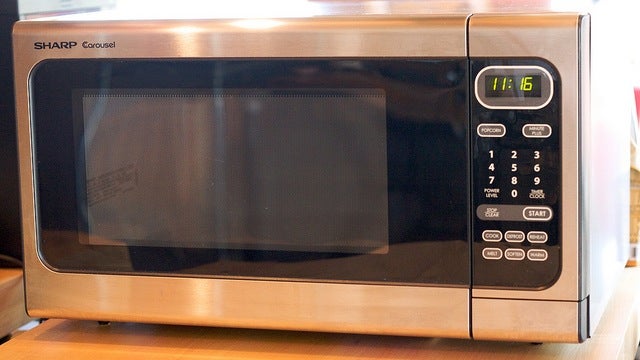
When you buy a microwave oven you expect it to provide many years of dependable service. Modern microwaves are well-made and most are built to last. However, there are things you can do to keep your oven in good condition and prolong its usefulness. These seven tips will help you get the most from your microwave and avoid many headaches.

1. Read the instructions. Learning all about your oven will keep you from making mistakes that shorten its lifespan. These papers may contain valuable information. For instance, you can find out how to cook, defrost, and use all of the other functions. In fact, you may discover functions that you didn't know you had.
2. Keep it clean. A dirty oven makes for unhealthy cooking and can cause people in the household to become ill. Also, when bits of food become lodged in turn table rollers, it can result in premature wear. Dirty appliances corrode much quicker than clean ones and you could be buying a new oven before you know it. The best way to keep your oven clean is to cover everything before cooking or heating. This will keep you from spending your weekends scraping cheese from the inside walls and ceilings.

3. Utilize child lockout functions. Raising kids is one of life's great pleasures, but also one of life's biggest challenges. Nothing shortens the life of a good microwave like scientific experiments. Kids have been known to place aluminum foil inside of microwave ovens, just to see what happens.This can cause serious damage and may result in a fire hazard. There is only way to insure that children do not use the appliance unsupervised, and that is to lock them out.

4. Maintain the door latch. When you clean the oven make sure to clean off the latch too. If not, it will soon get sticky and the door may not operate properly. In time, this will cause excessive wear on your door latch. Keep it clean and if it sticks, apply a tiny amount of cooking oil.

5. Consider surge protection. If you live in an area with frequent lightning, you should invest in surge protection for your appliances. Whole house protection is best and will more than pay for itself with one major power surge. Many power companies have special offers and programs for home electrical surge protection, and they will provide you with a free inspection. If you cannot afford a whole house system, buy surge protection strips and be certain that you use one with the proper rating for your oven.

6. Know when to say goodbye. At some point your old oven will see its better day. Instead of hanging on and making life inconvenient for you and the family, buy a new microwave oven. Today's ovens are not overly expensive and come with more power and features than ever before. Also, consider buying a two year extended warranty. They do not cost much and if you have a major problem in the first two years, you can return the appliance for a new one. Not everyone advises buying extended warranties but they provide something very important, peace of mind.

7. Microwave ovens must be disposed of properly. Never place them inside of trash barrels to be picked up. They contain radioactive materials and are considered hazardous waste. Contact your local refuse company and find out how you can properly dispose of your old oven.
Article Source: http://EzineArticles.com/?expert=Alice_Folsom